Tale & Tinker
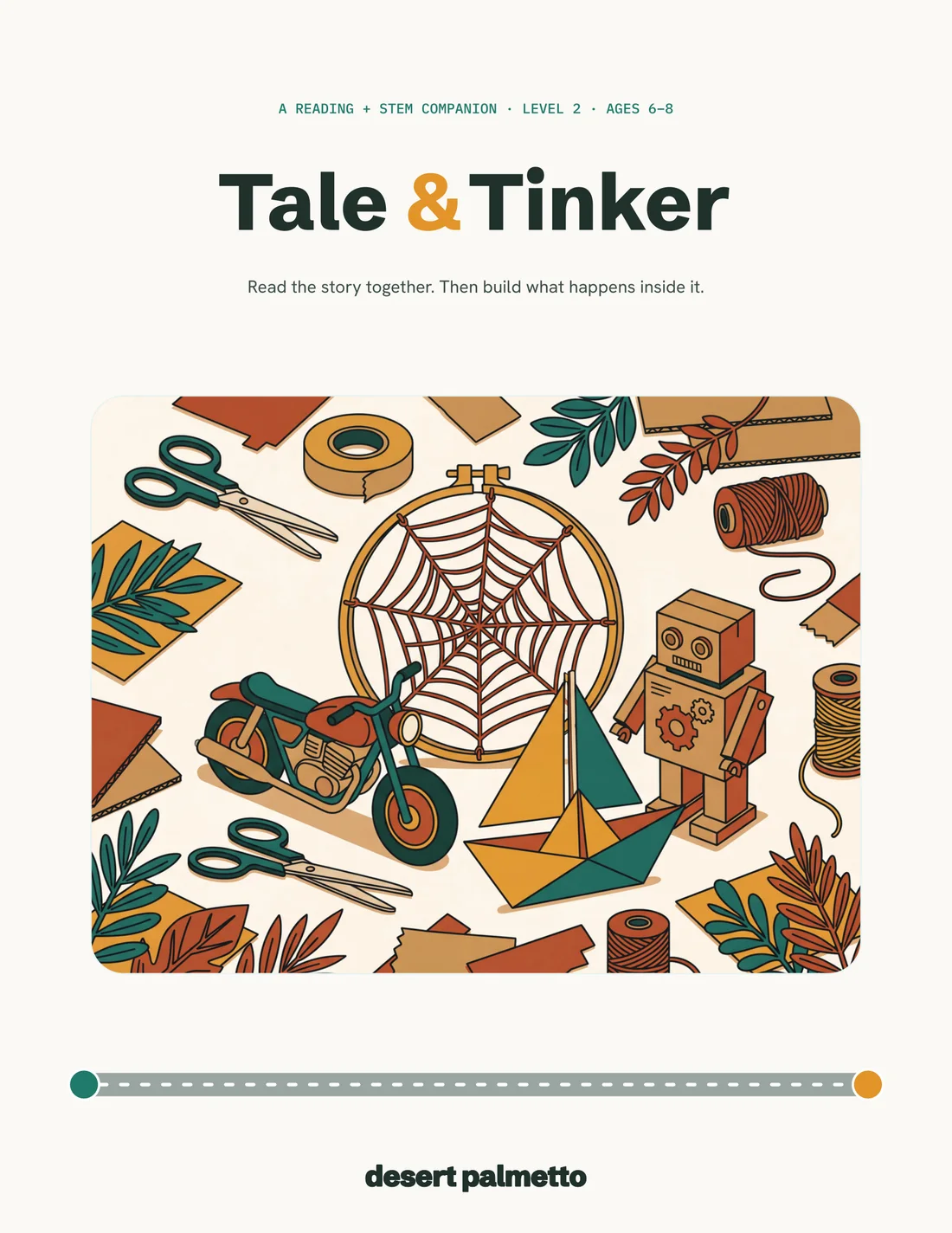
Twelve beloved chapter books. Twelve hands-on projects.
Every unit pairs one full chapter book with three weeks of making. Each week your child reads or listens, tells the story back, meets one real science idea, then builds — and the three projects stack into one finished build they can play with.
One week in every unit runs a true experiment — predict, test, observe, explain — on a printable kids’ lab sheet. Secret-mission questions, a fridge game-board, and a reading chart keep every chapter alive between build days.
It rides alongside any reading program, runs on ordinary household materials, and is secular and open-and-go. Above all, it’s built to help your child fall in love with reading.
- Level
- Level 2 · Ages 6–8
- Units
- 12 beloved books
- Length
- 36 weeks
- Pages
- 205
- Format
- US Letter PDF
$39 ONE TIME
Get the first unit free →Instant PDF download — on your printer in minutes. Print freely for your own household.
Exactly what you’ll hold
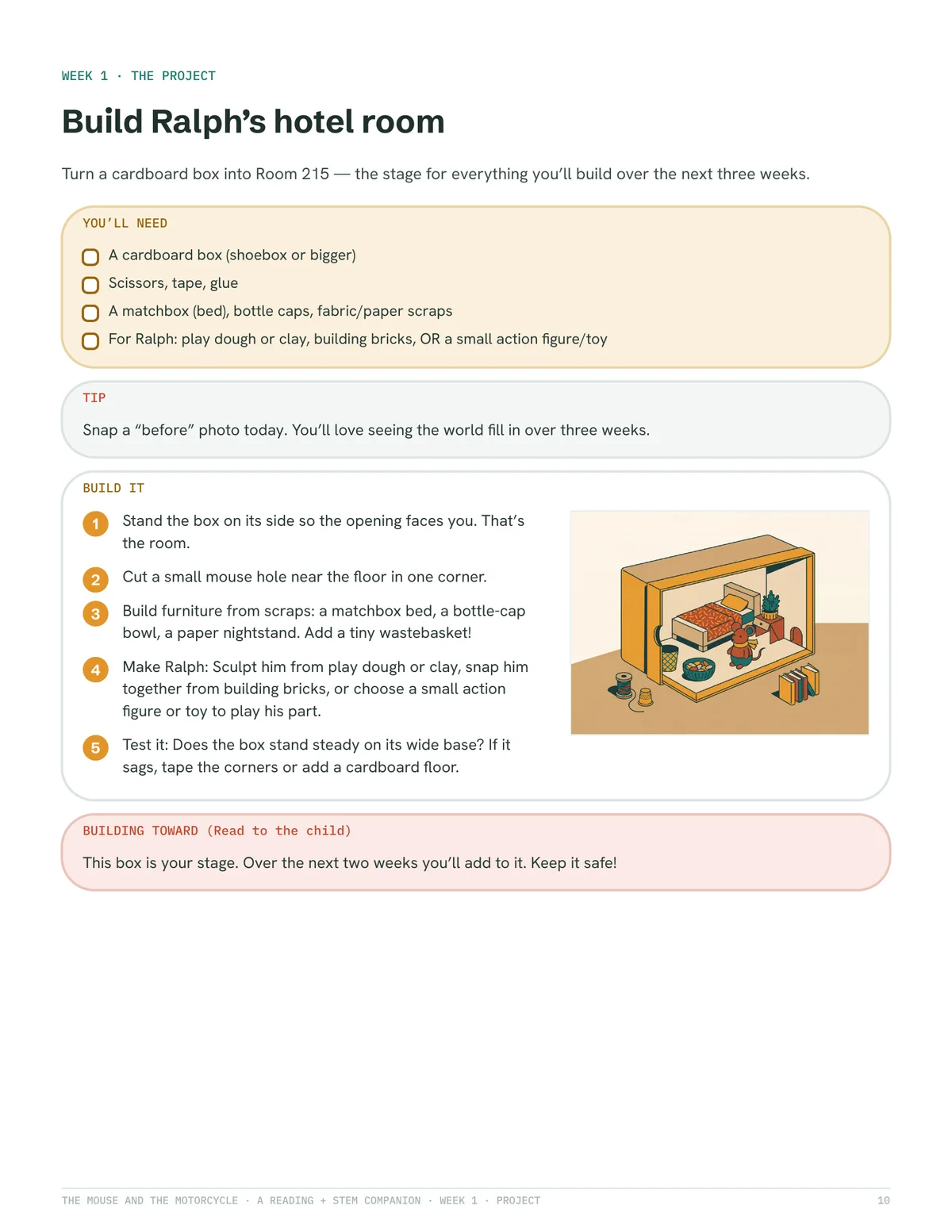
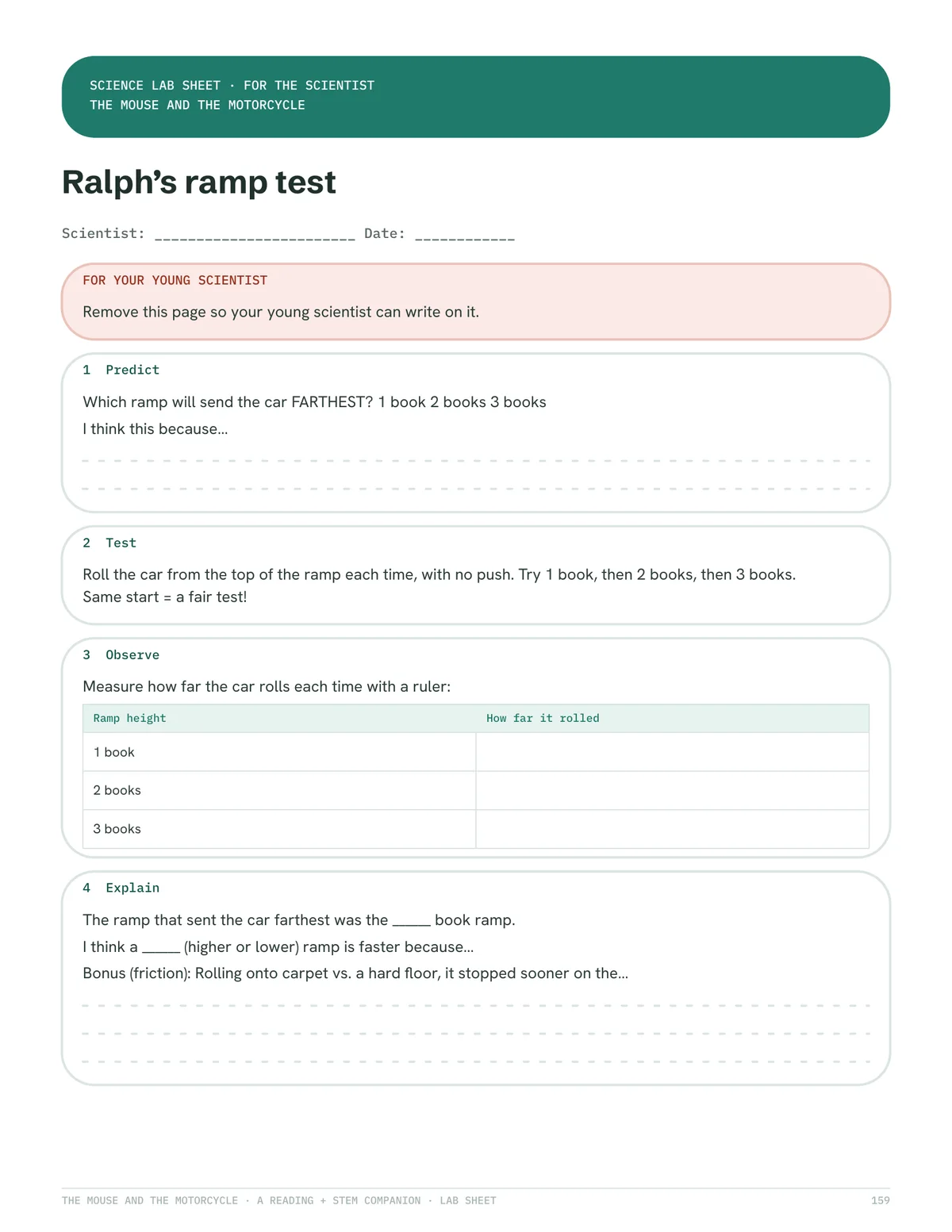
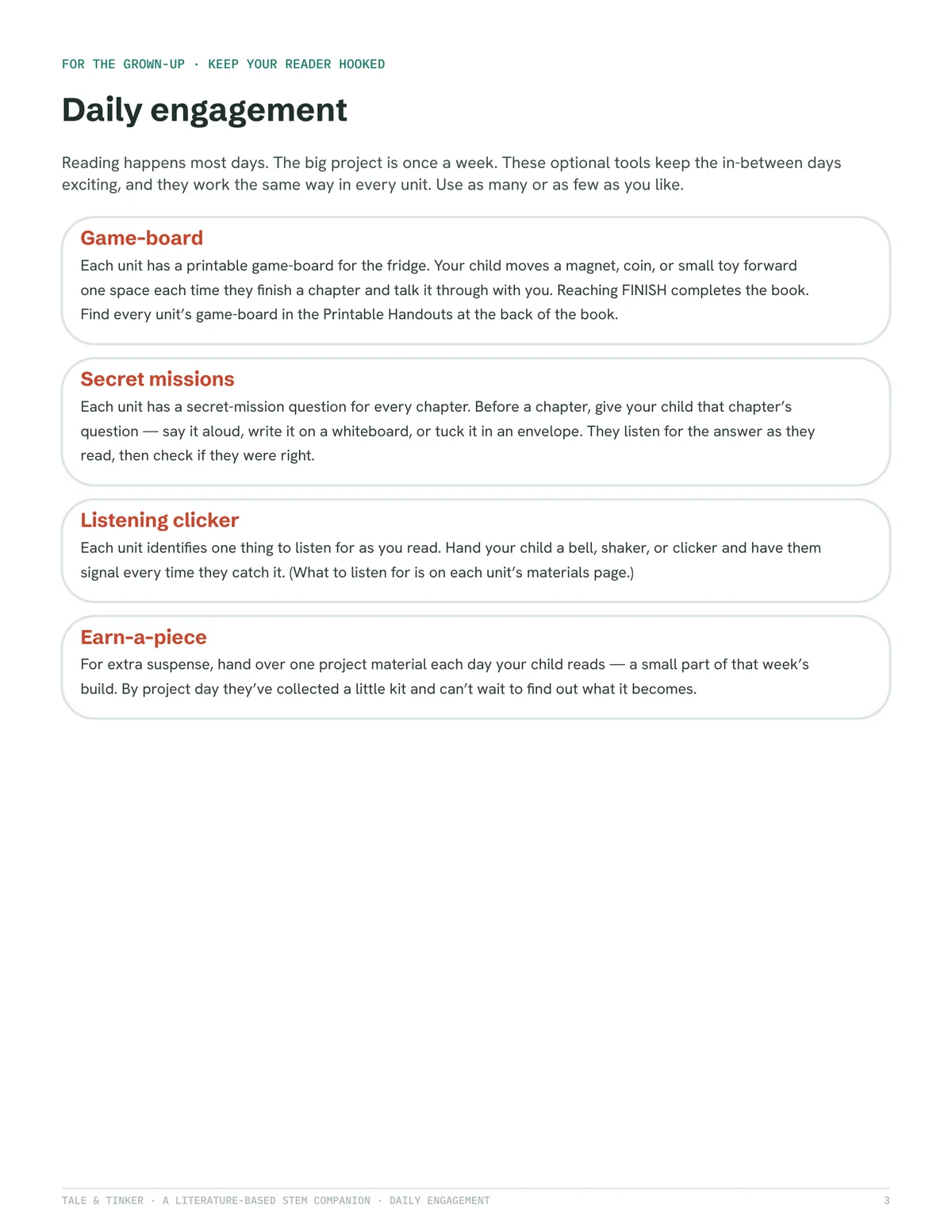
Twelve beloved chapter books. Twelve hands-on projects.
Three weeks per book, one science principle per week, and a build that grows with the story. Open any unit.
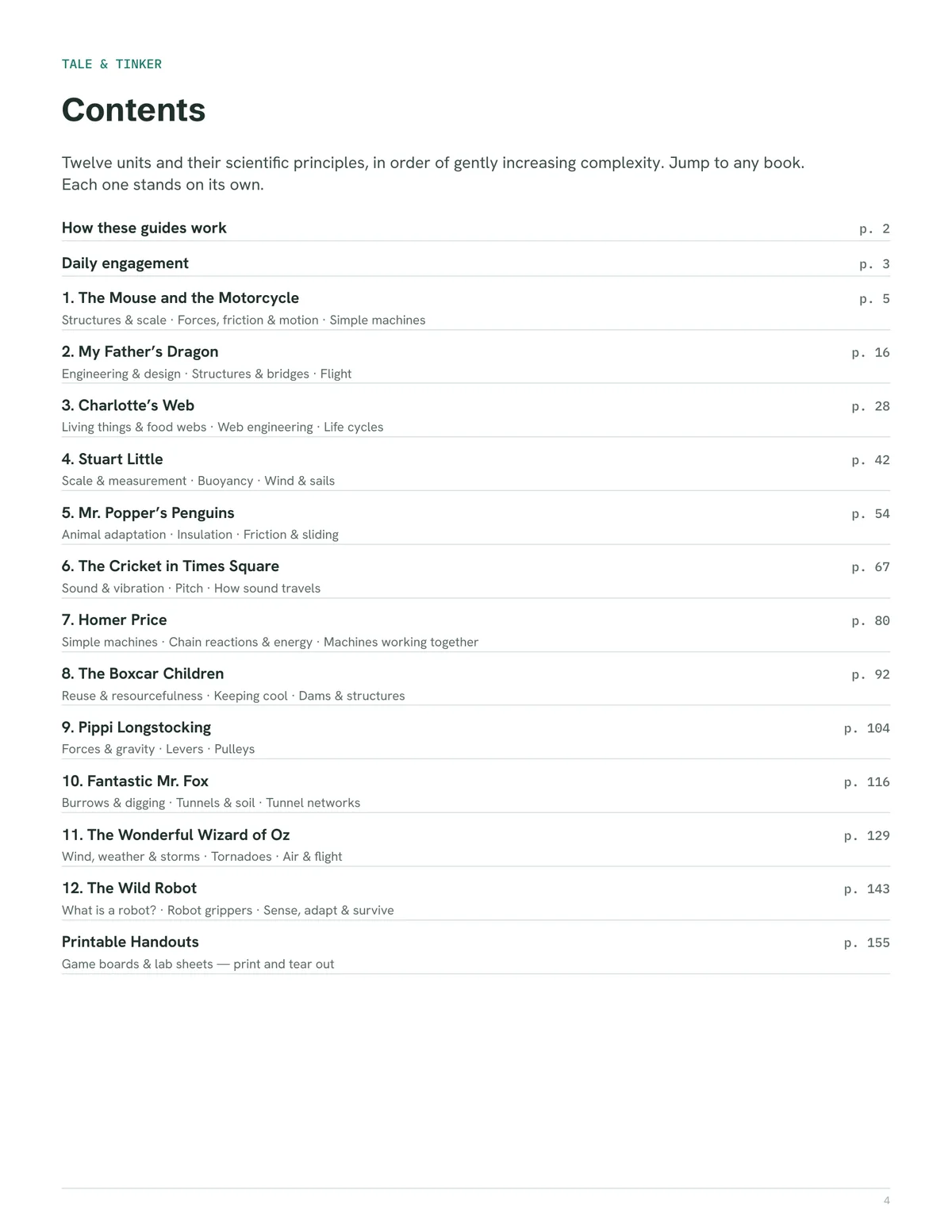
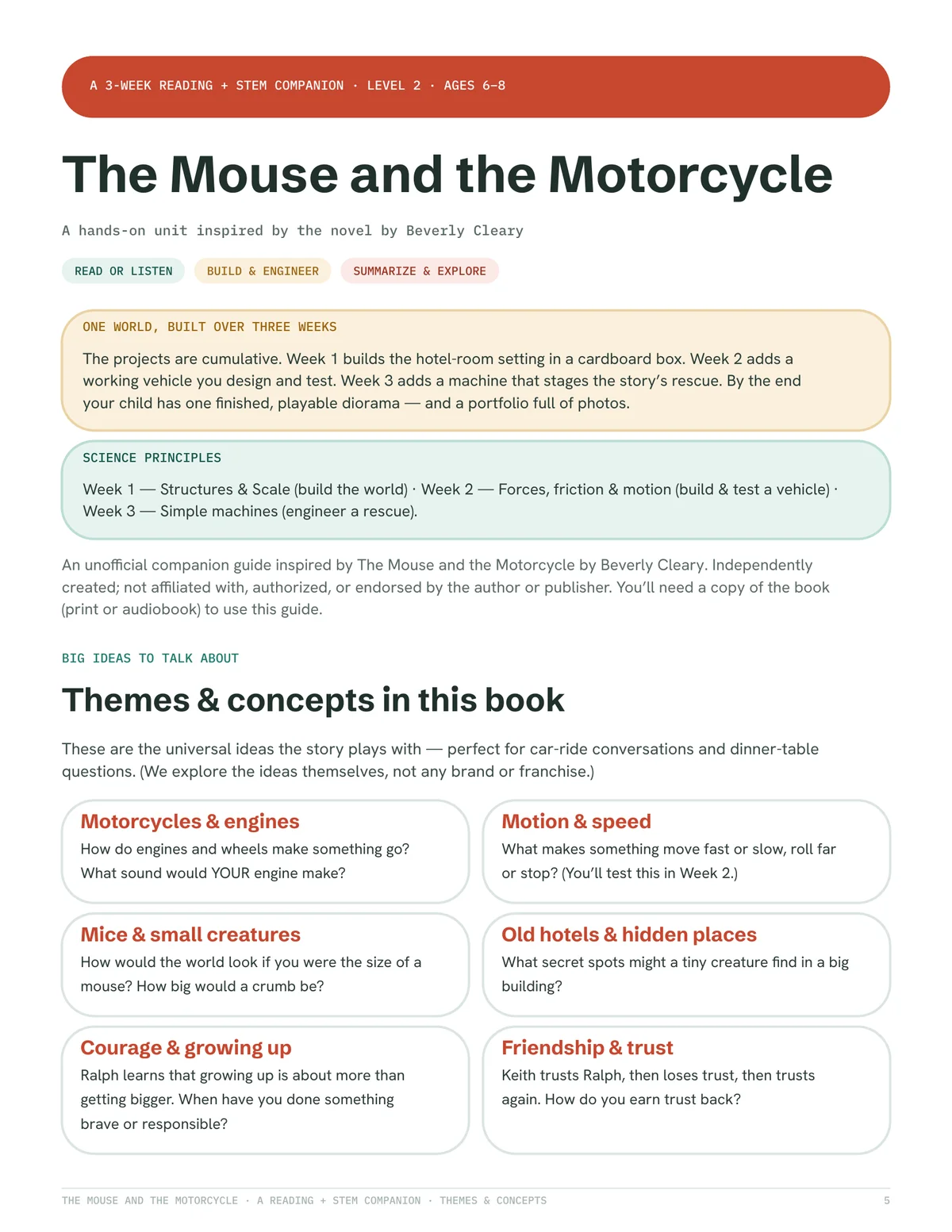
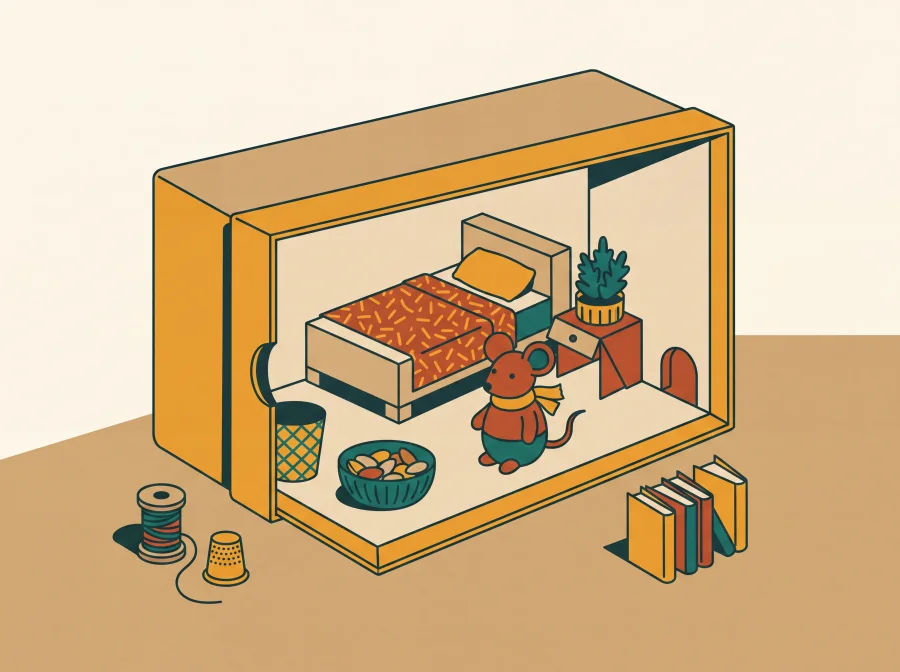 Unit 01 The Mouse and the Motorcycle
- Week 1 Structures & scale
- Week 2 Forces, friction & motion
- Week 3 Simple machines
The buildA hotel room in a cardboard box, a vehicle that really rolls, and a machine that stages the rescue — one playable diorama.
 Unit 02 My Father’s Dragon
- Week 1 Engineering & design
- Week 2 Structures & bridges
- Week 3 Flight
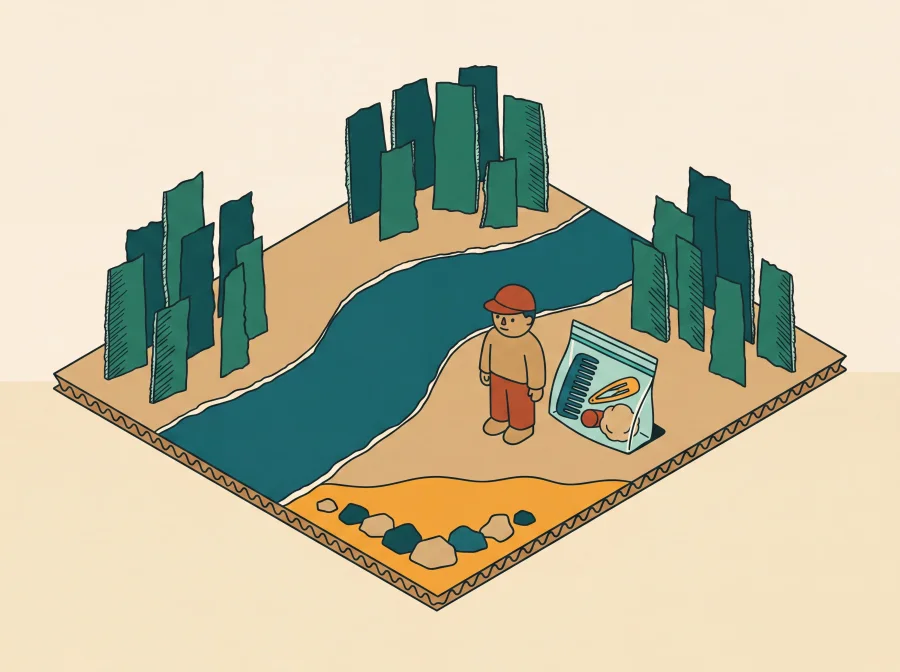
The buildWild Island in a box, a bridge that holds, and a dragon glider that launches to freedom.
 Unit 03 Charlotte’s Web
- Week 1 Living things & food webs
- Week 2 Web engineering
- Week 3 Life cycles
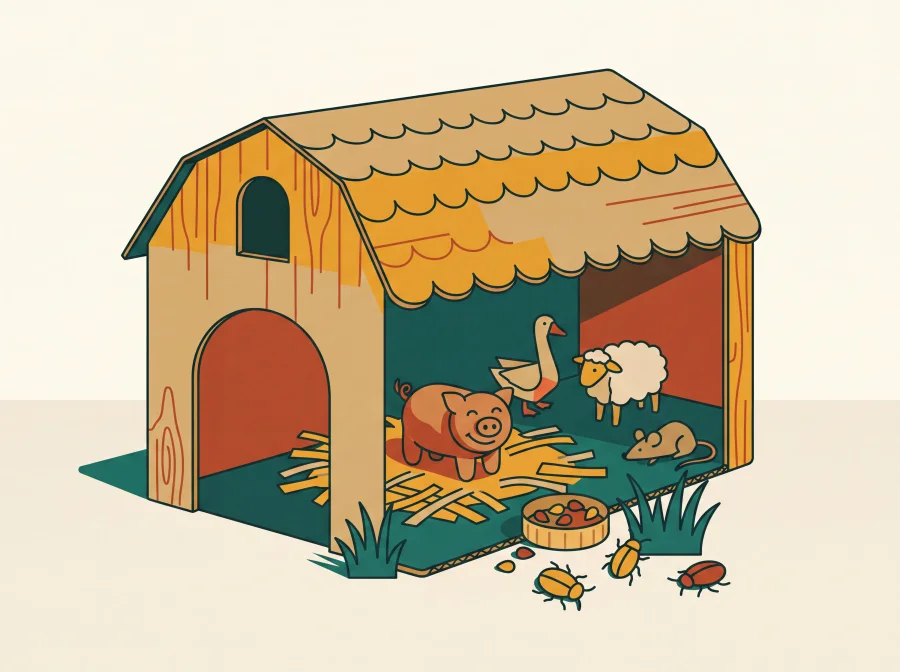
The buildThe Zuckerman barn, a web spun and tested in its doorway, and an egg sac ready for spring.
 Unit 04 Stuart Little
- Week 1 Scale & measurement
- Week 2 Buoyancy
- Week 3 Wind & sails
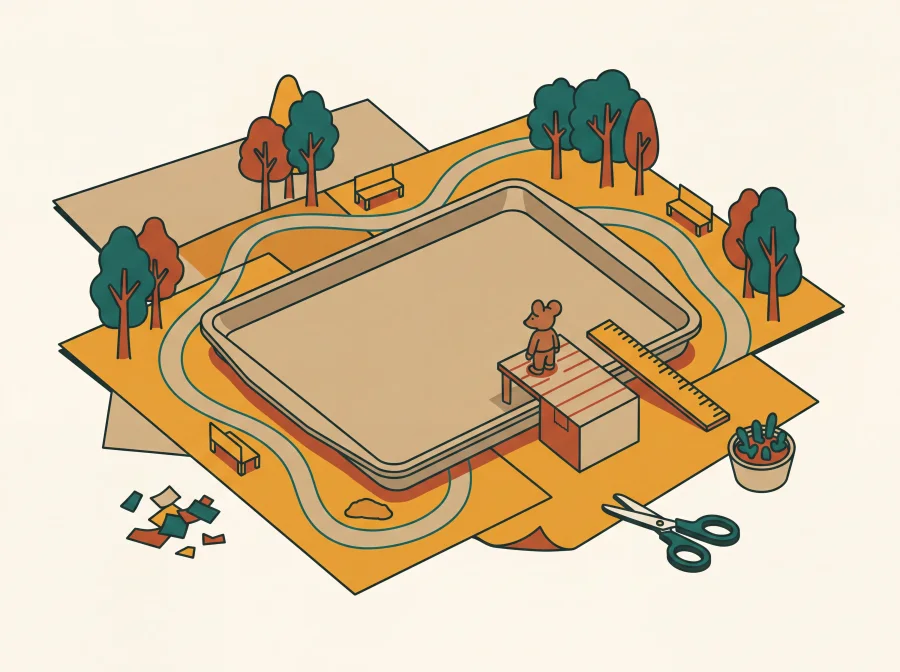
The buildTiny Stuart, his pond, a boat that floats and carries, and a sail to race it across.
 Unit 05 Mr. Popper’s Penguins
- Week 1 Animal adaptation
- Week 2 Insulation
- Week 3 Friction & sliding
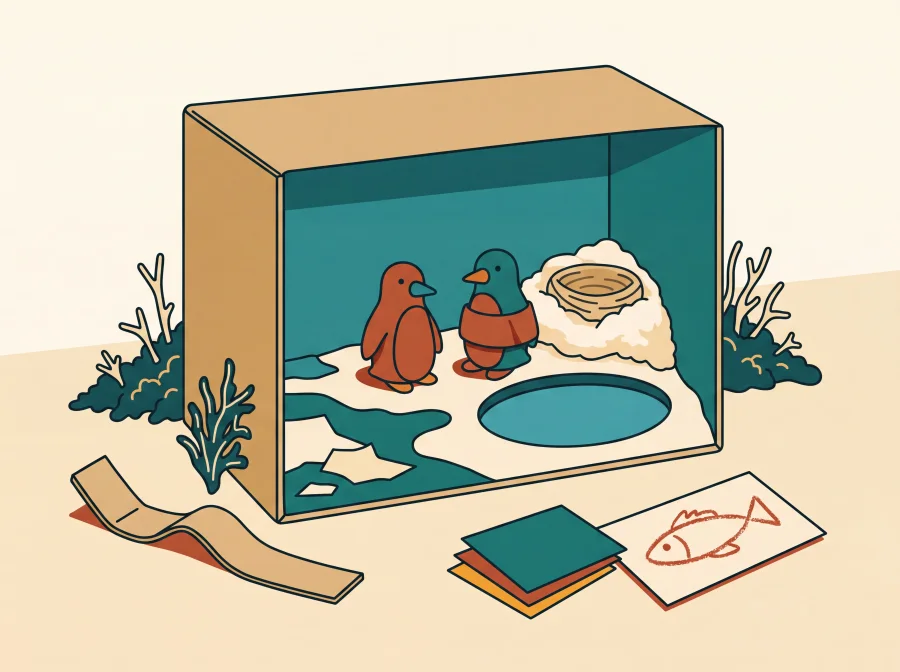
The buildAn icy penguin habitat, an insulated den that keeps the cold in, and a slide for performing penguins.
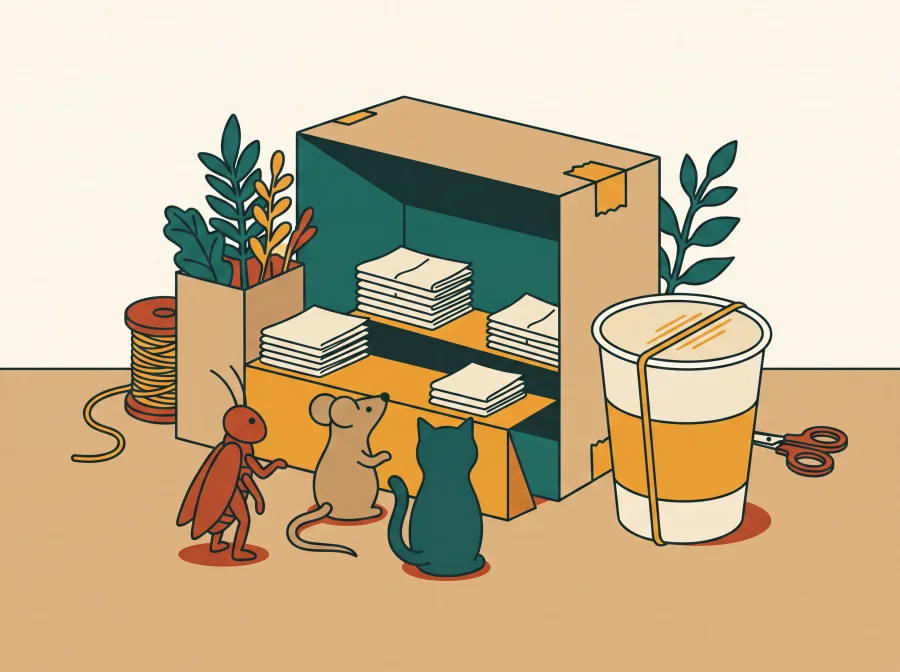 Unit 06 The Cricket in Times Square
- Week 1 Sound & vibration
- Week 2 Pitch
- Week 3 How sound travels
The buildThe Bellinis’ newsstand, a real little instrument, and a megaphone to carry the music.
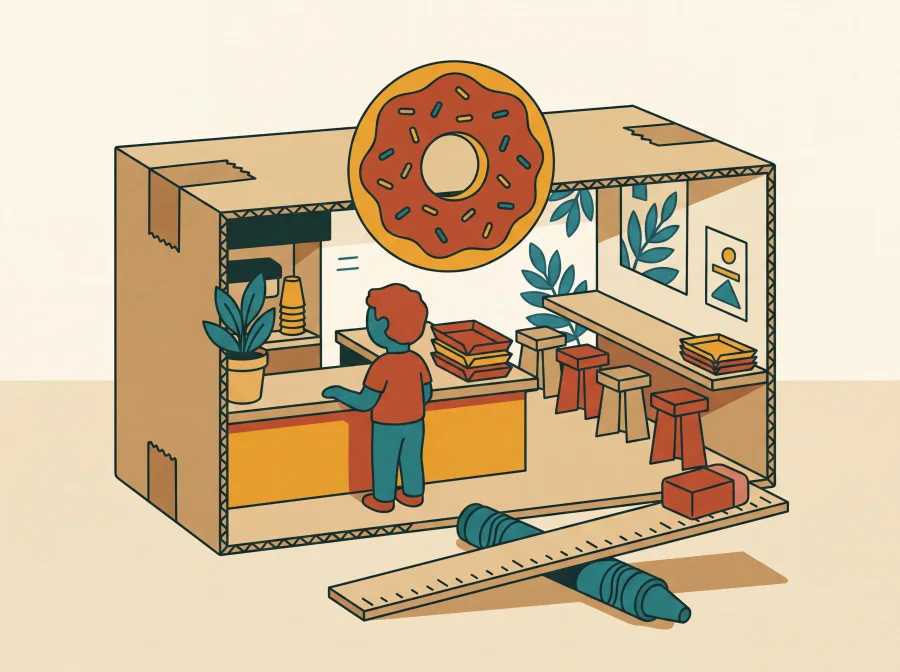 Unit 07 Homer Price
- Week 1 Simple machines
- Week 2 Chain reactions & energy
- Week 3 Machines working together
The buildUncle Ulysses’s lunchroom, the runaway doughnut machine, and one grand chain-reaction contraption.
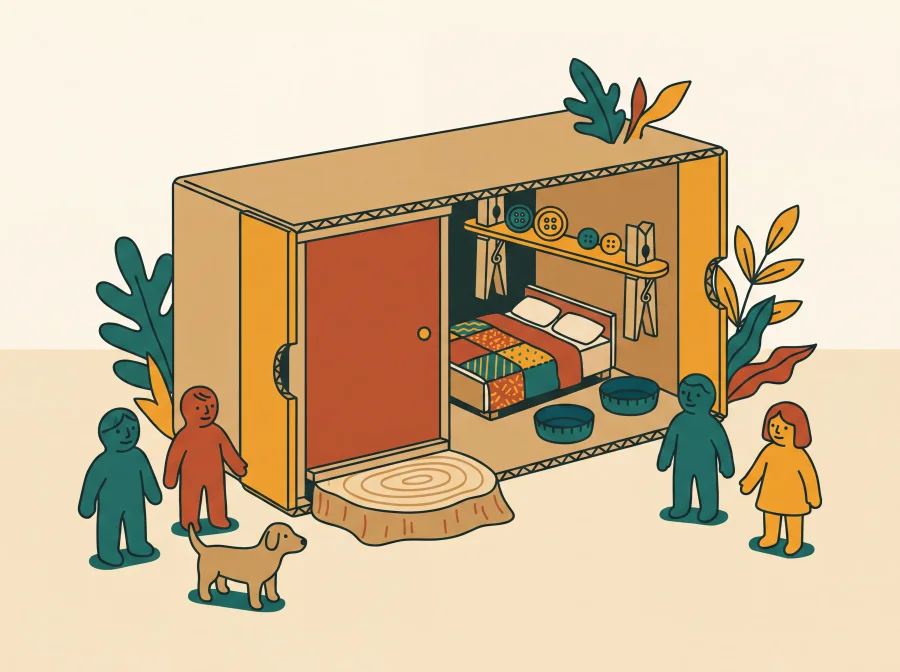 Unit 08 The Boxcar Children
- Week 1 Reuse & resourcefulness
- Week 2 Keeping cool
- Week 3 Dams & structures
The buildA boxcar home from found things, a no-electricity cooler, and a dam with its own pool.
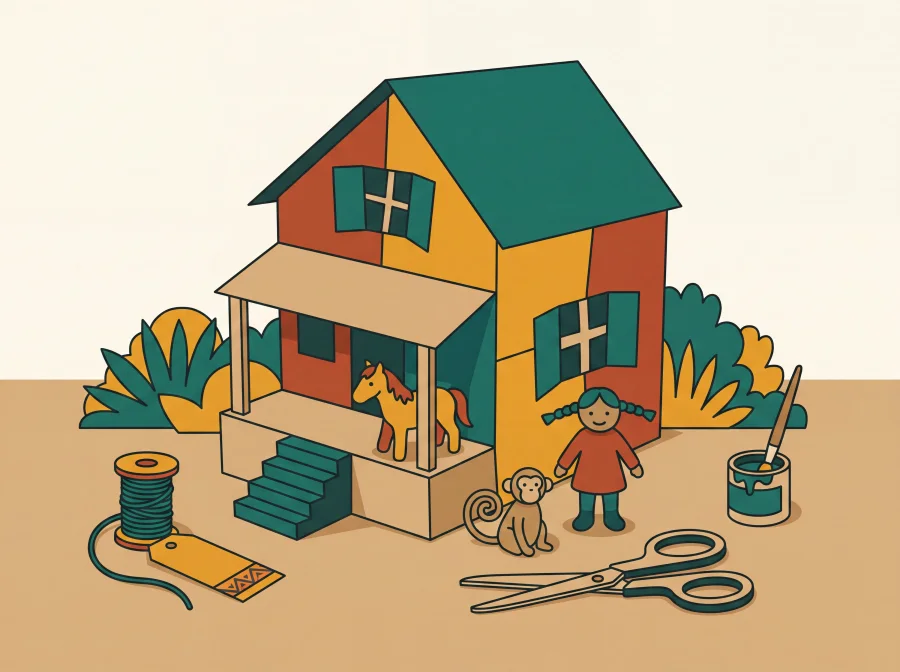 Unit 09 Pippi Longstocking
- Week 1 Forces & gravity
- Week 2 Levers
- Week 3 Pulleys
The buildVilla Villekulla, a lever that lifts easily, and a pulley that hoists Pippi’s horse.
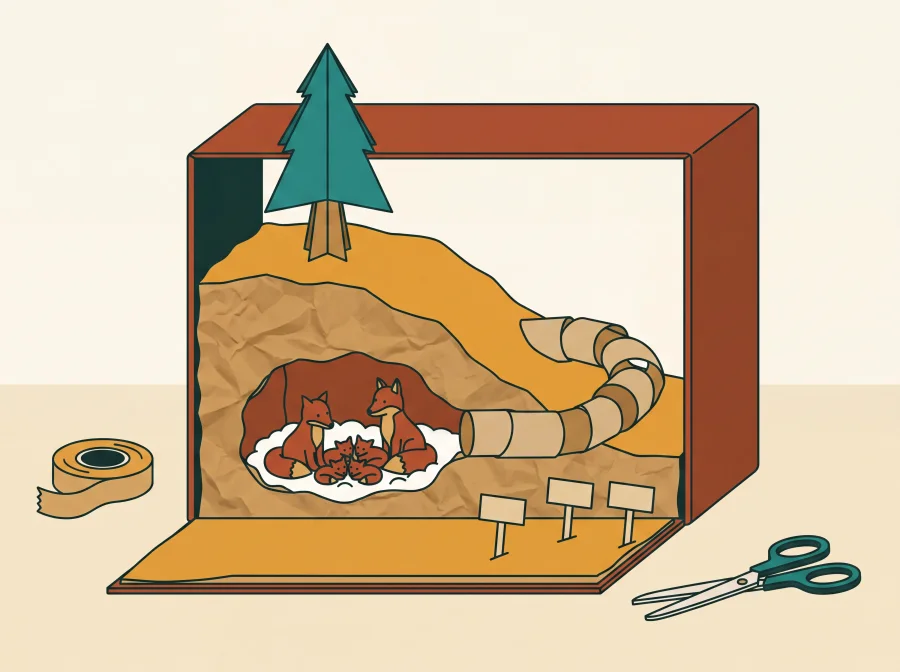 Unit 10 Fantastic Mr. Fox
- Week 1 Burrows & digging
- Week 2 Tunnels & soil
- Week 3 Tunnel networks
The buildThe foxes’ den, a tunnel that won’t cave in, and a network that reaches all three farms.
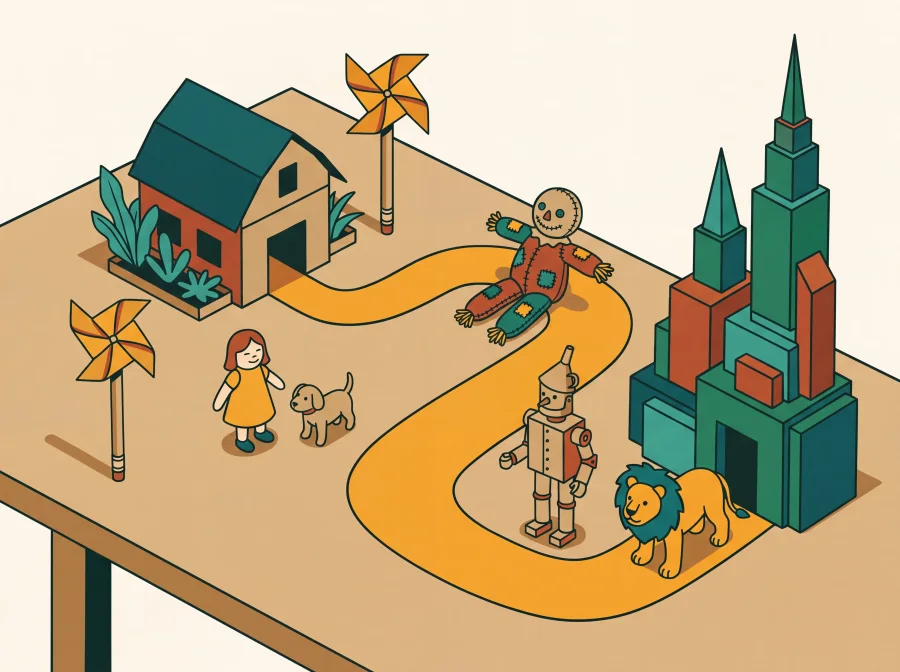 Unit 11 The Wonderful Wizard of Oz
- Week 1 Wind, weather & storms
- Week 2 Tornadoes
- Week 3 Air & flight
The buildThe road to the Emerald City, a real tornado in a bottle, and a parachute to drift home.
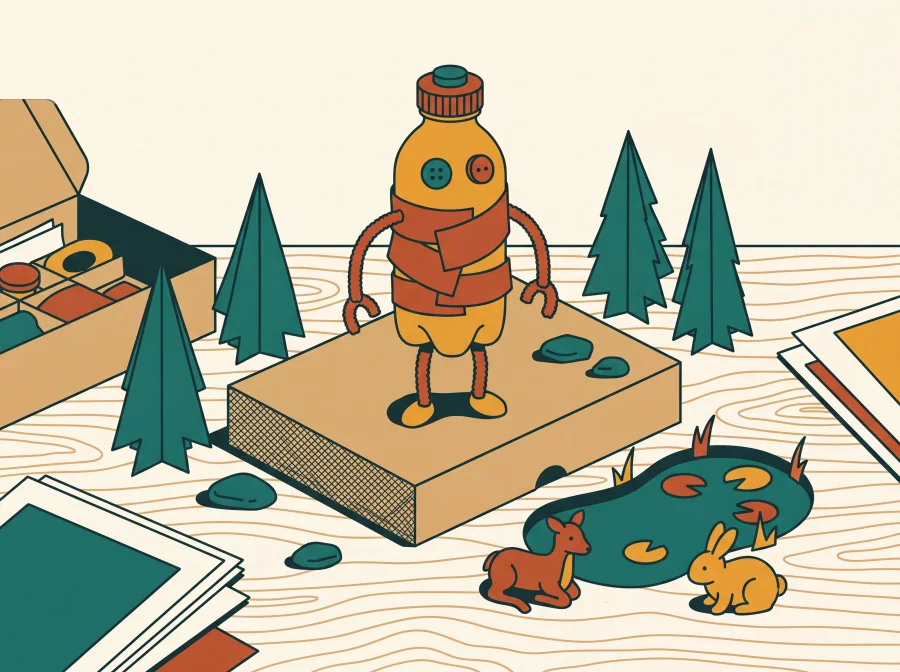 Unit 12 The Wild Robot
- Week 1 What is a robot?
- Week 2 Robot grippers
- Week 3 Sense, adapt & survive
The buildRoz the robot on her island, a working gripper, and a camouflaged winter lodge.
For the grown-up
- It protects the child’s choice and runs on ordinary household materials.
- Portfolio-friendly: the game-board, photos, and projects document a year of growth.
- Secular, screen-free, and flexible — reading matters most; a busy week’s project can slide.
One PDF, a full year
- Twelve book units — 36 weeks of read, talk, and build
- Read-aloud and audiobook friendly — your child doesn’t have to read independently yet
- A real experiment with a printable kids’ lab sheet in every unit
- Secret-mission questions for every day’s reading, in every book
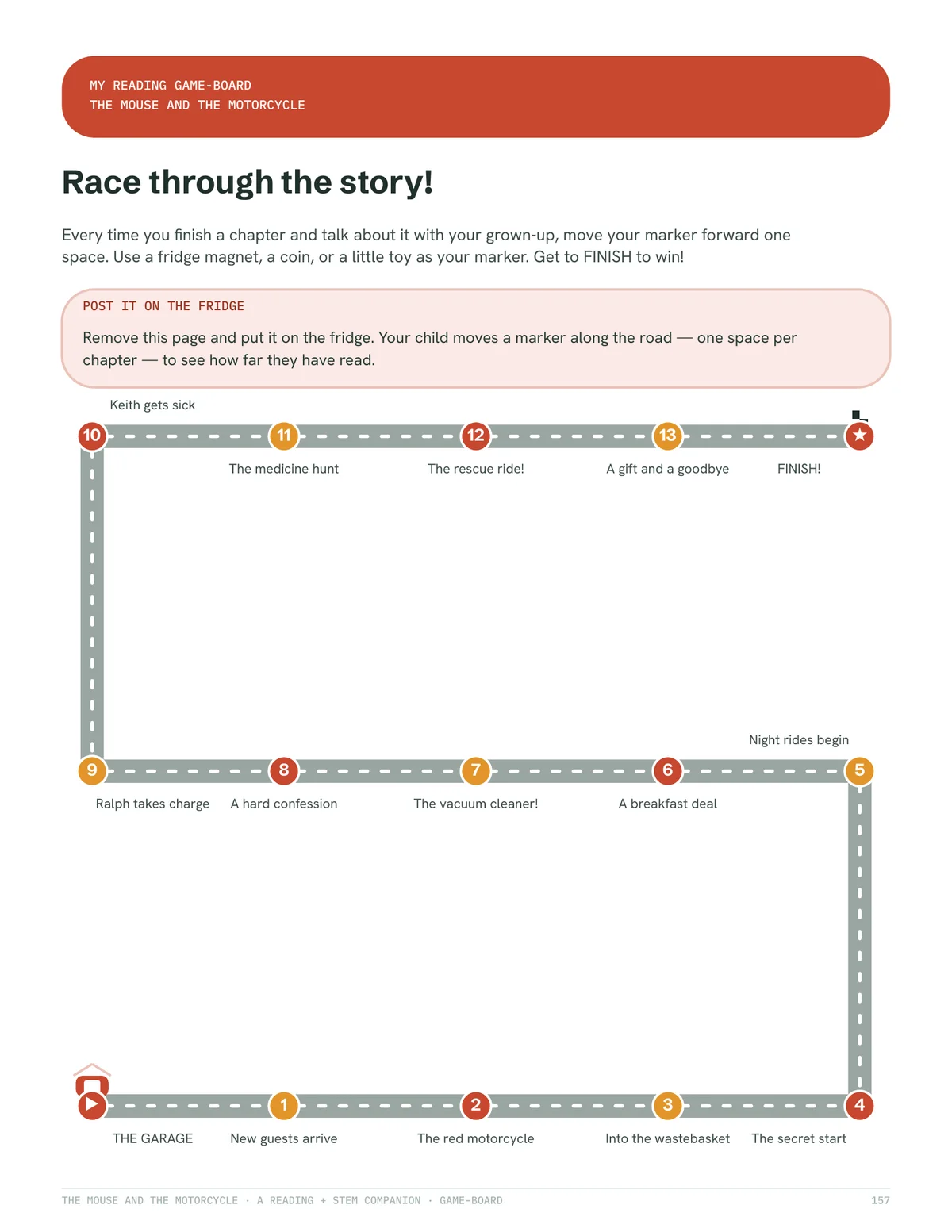
- A printable game-board and reading chart for every book
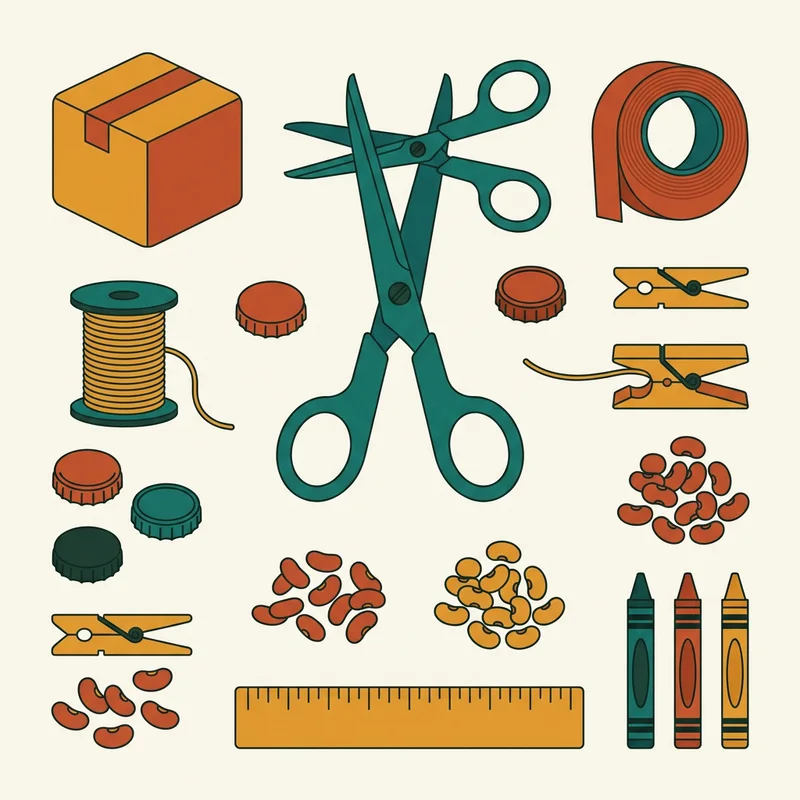
- Simple materials lists — ordinary household stuff, nothing to buy as a kit
- Instant digital download
An independent reading & STEM study companion. Created independently; not affiliated with, authorized, or endorsed by the authors or publishers of the featured books. You provide the books (print or audiobook) to use alongside this guide.